
 Save
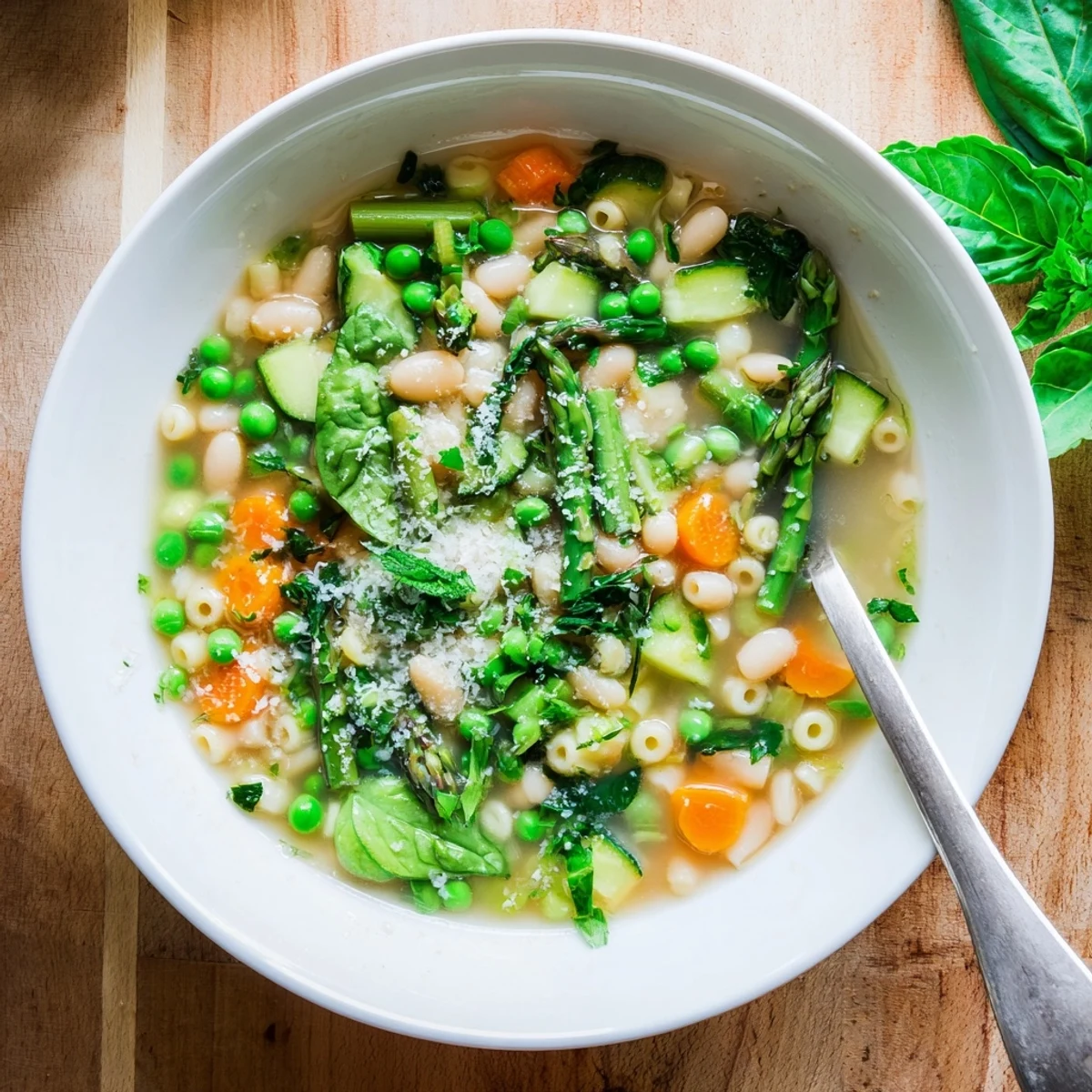
Save This bright, nourishing minestrone brings together the best of spring produce—asparagus, zucchini, peas, and baby spinach—in a savory vegetable broth with cannellini beans and small pasta. Finished with fresh basil, parsley, and a splash of lemon juice, it comes together in just 45 minutes with minimal prep. The result is a light yet satisfying bowl that pairs wonderfully with crusty bread and a glass of Pinot Grigio. Easily adaptable with other seasonal vegetables or made vegan by skipping the optional Parmigiano Reggiano.
The farmers market had just opened for the season and I came home with way more vegetables than any reasonable person needs, which is exactly how this soup happened. My neighbor peeked at my grocery bags and laughed, then showed up at my door an hour later with a loaf of sourdough because she knew where this was heading.
I made a double batch of this for a friend who was moving away and we sat on her kitchen floor eating it out of mismatched bowls because all her dishes were already packed. She still texts me about that soup every April.
Ingredients
- Olive oil: A good extra virgin makes a real difference here since it is the foundational flavor of the whole soup
- Onion: Finely chopped so it melts into the broth rather than leaving chunky bits
- Garlic: Minced fresh, do not even think about the jarred stuff for this one
- Carrots: Diced small so they cook at the same rate as the softer vegetables
- Asparagus: Cut into one inch pieces, snapping off the woody ends first
- Zucchini: Diced to match the carrots for even cooking
- Peas: Fresh are incredible but frozen work perfectly fine if you are not at the market
- Baby spinach: Added at the very end so it stays bright green and tender
- Vegetable broth: Use a good quality one since it makes up most of the liquid
- Cannellini beans: Rinsed well to remove the starchy can liquid
- Small pasta: Ditalini or orzo both work great, just do not use anything too large
- Salt and pepper: Start with the listed amounts and adjust at the very end
- Fresh basil and parsley: Do not substitute dried herbs here, the fresh ones make the soup sing
- Lemon juice: Added off the heat to preserve that bright, fresh pop
- Parmigiano Reggiano: Optional but honestly it pushes the whole thing over the top
Instructions
- Build the base:
- Heat olive oil in a large pot over medium heat and cook the onion for about three minutes until it goes soft and translucent. You want it sweet, not browned.
- Add the aromatics:
- Toss in the garlic and carrots, stirring for two to three minutes until your whole kitchen smells amazing.
- Bring in the spring vegetables:
- Stir in the asparagus, zucchini, and peas and let them cook for two minutes, just enough to wake them up.
- Simmer with broth and beans:
- Pour in the vegetable broth and bring everything to a boil, then add the cannellini beans and pasta. Drop the heat, cover the pot, and let it simmer for eight to ten minutes until the pasta is tender.
- Finish with greens and herbs:
- Stir in the spinach, basil, and parsley and cook just one to two minutes until the spinach wilts and turns that gorgeous deep green.
- Season and serve:
- Pull the pot off the heat, stir in the lemon juice, and taste for salt and pepper. Ladle into bowls and shower with grated Parmigiano Reggiano if you are feeling generous with yourself.
 Save
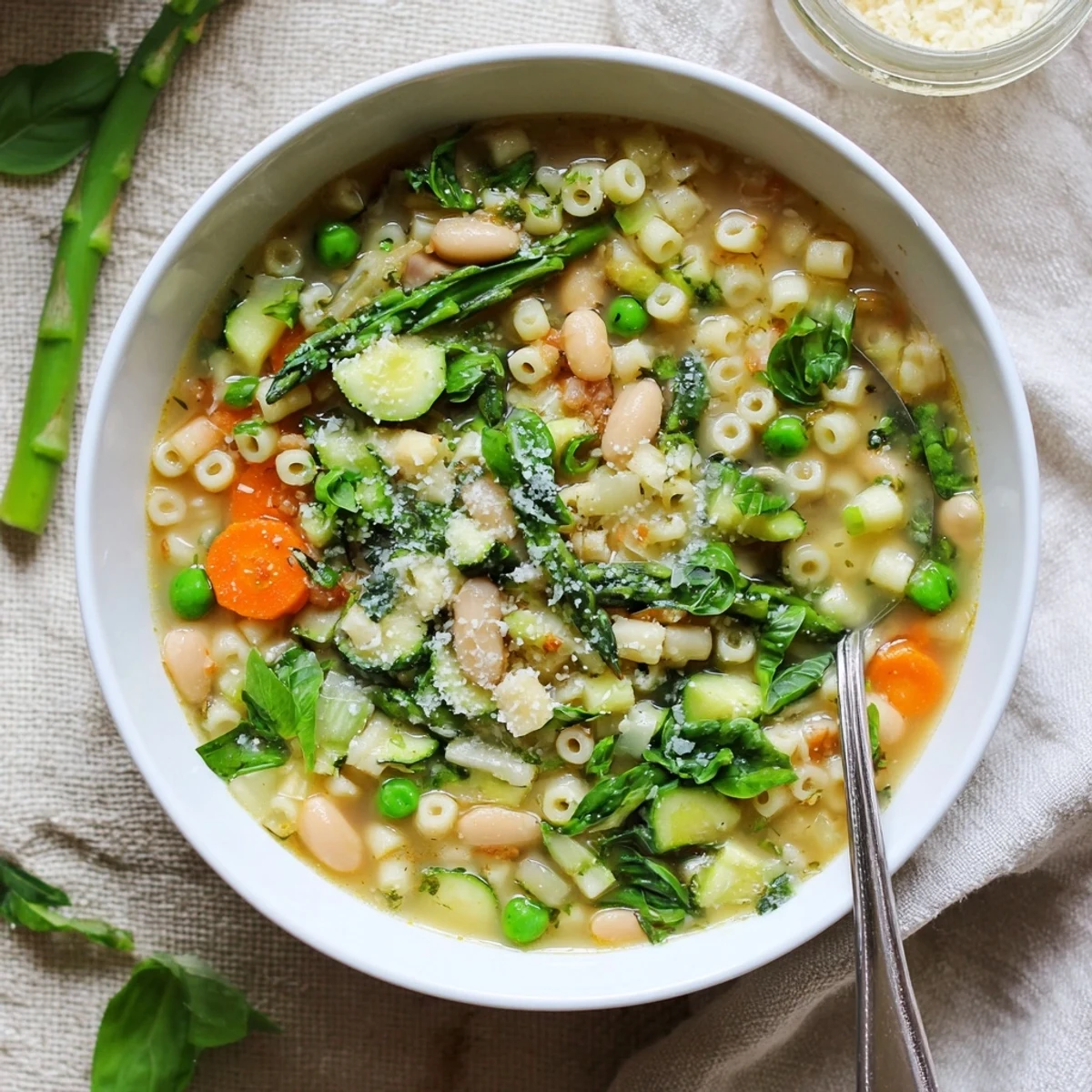
Save My mother in law, who is not easily impressed by meatless meals, went back for thirds the first time I served this. She called it church soup because she said it made her feel that peaceful.
Picking Your Vegetables
The beauty of minestrone is its flexibility, so let the market guide you. Fava beans, green beans, or even diced leeks can step in for any of the spring vegetables listed. I have thrown in radishes on a whim and it worked surprisingly well.
The Broth Matters More Than You Think
I spent years using whatever broth was on sale and wondering why my soups tasted flat. Switching to a high quality vegetable broth, or even better making your own, changed everything overnight. If your broth tastes good on its own your soup will too.
Serving It Right
This soup deserves a thick slice of crusty bread for dunking and honestly a cold glass of Pinot Grigio alongside it never hurt anybody. The bread is non negotiable in my house.
- Toast the bread with a rub of garlic and olive oil for something special
- Let everyone add their own cheese at the table so vegans stay happy
- Make extra because the leftovers are somehow even better the next day
 Save
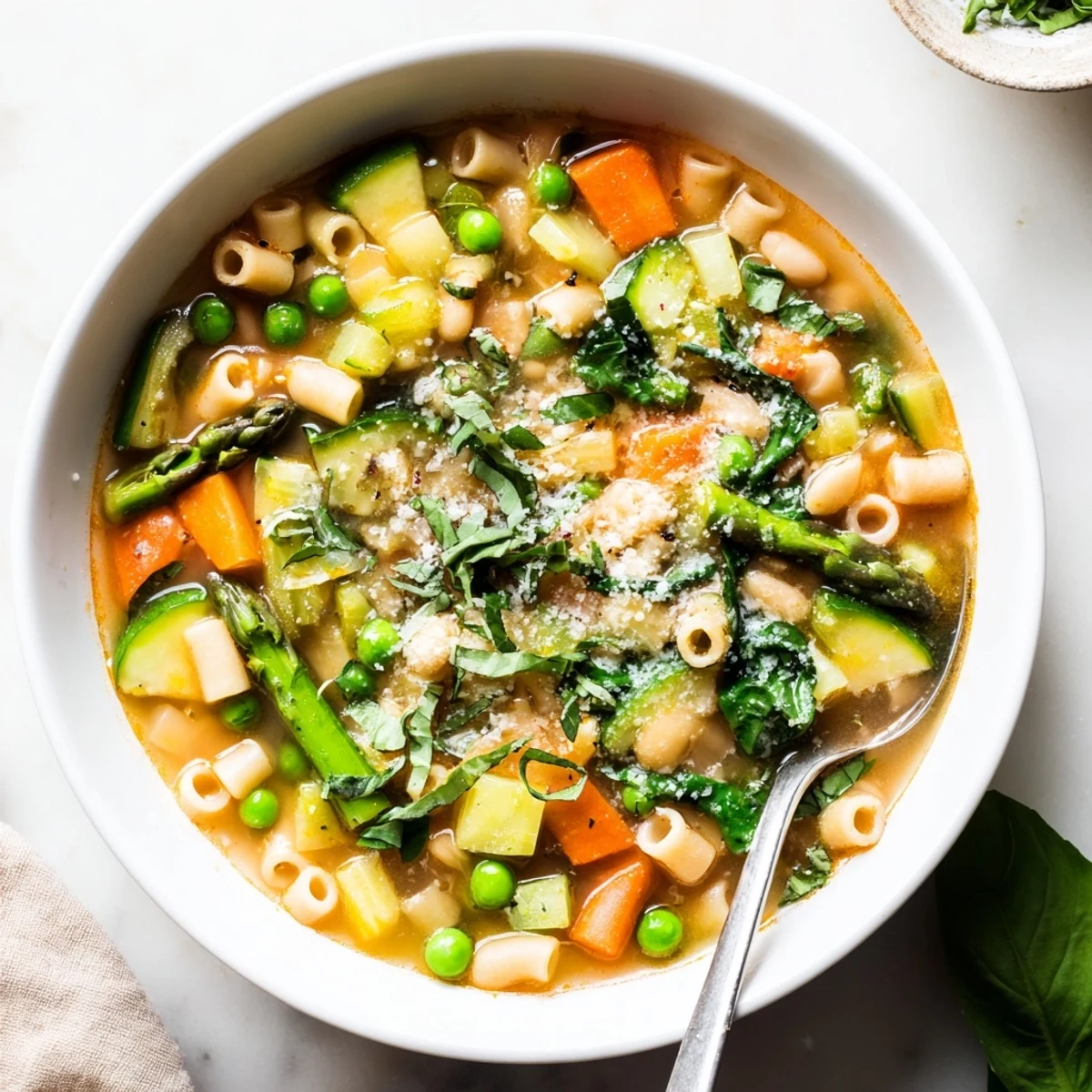
Save Soup this simple and this good reminds you why people have been cooking vegetables in pots for thousands of years. Sometimes the best meals are the ones that just let good ingredients do the talking.
Recipe Questions
- → What vegetables work best in spring minestrone?
-
Asparagus, zucchini, peas, and baby spinach are classic choices. You can also add fava beans, green beans, or leeks depending on what's fresh and available.
- → Can I make this soup ahead of time?
-
Yes, but the pasta may absorb broth as it sits. Store the soup without pasta and cook it separately when reheating, then combine before serving.
- → How do I make it vegan?
-
Simply omit the Parmigiano Reggiano garnish or replace it with a plant-based cheese alternative. All other ingredients are naturally vegan.
- → What type of pasta should I use?
-
Small shapes like ditalini or orzo work best because they fit on a spoon easily. Use gluten-free pasta if needed—just check the cooking time.
- → How long does it keep in the fridge?
-
Store leftovers in an airtight container for up to 3 days. Reheat gently on the stovetop, adding a splash of broth if the soup has thickened.
- → Can I freeze spring minestrone?
-
The soup freezes well for up to 2 months, though the pasta texture may soften slightly. For best results, freeze without pasta and add fresh pasta when reheating.