
 Save
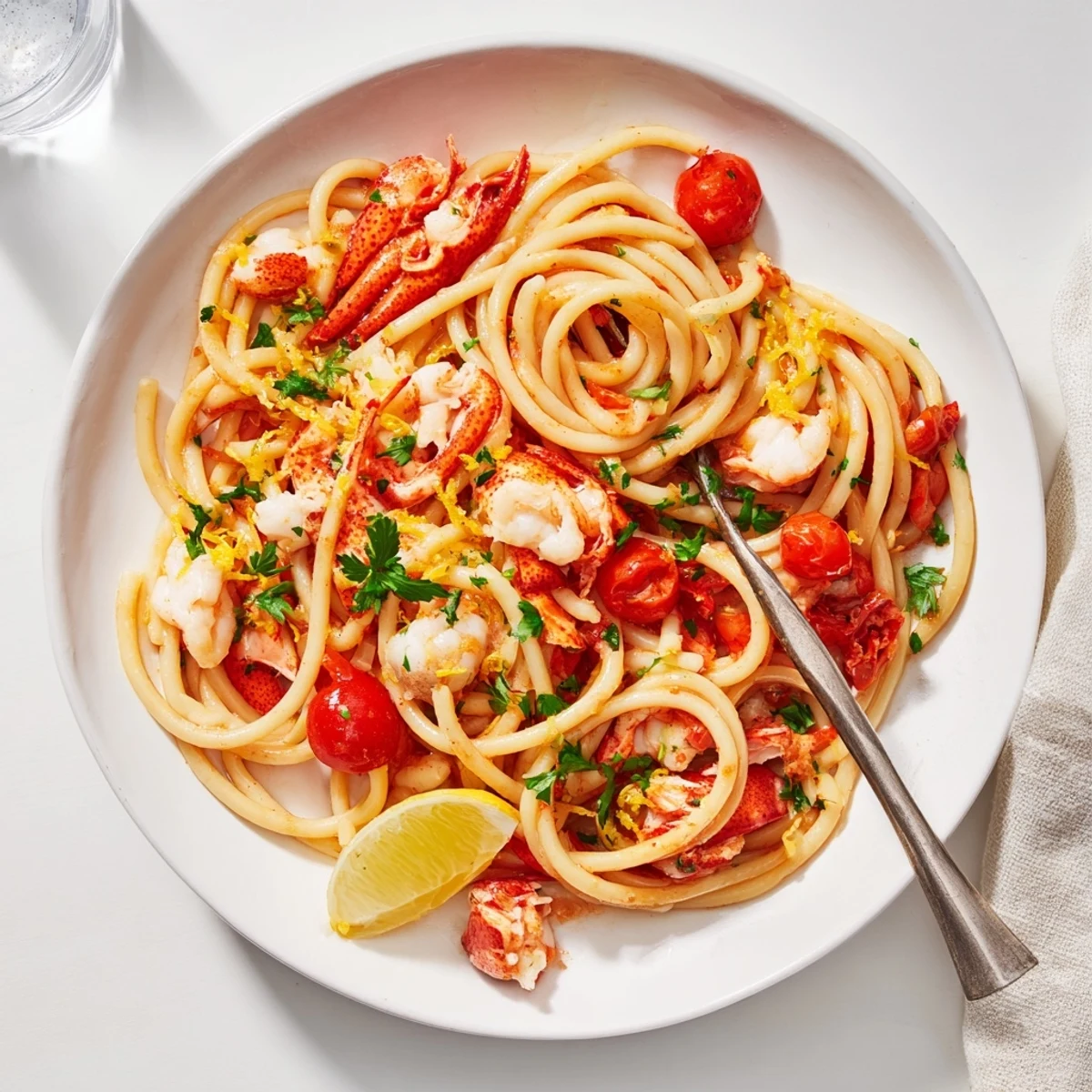
Save Indulge in this elegant Italian-inspired dish featuring succulent lobster meat paired with thick bucatini pasta. The luxurious sauce combines aromatic garlic and shallots with sweet cherry tomatoes, dry white wine, and seafood stock. Finished with butter, fresh lemon, and parsley, every strand of pasta gets coated in the silky, flavorful sauce.
Perfect for special occasions or when you want to elevate a weeknight dinner, this dish balances richness with bright acidity. The total time of 45 minutes includes preparing the lobster, making it achievable for home cooks who want restaurant-quality results.
The first time I made lobster pasta at home, I stood over the pot like it might suddenly disappear. My kitchen smelled like butter and garlic, and I kept lifting the lid just to check. That night taught me that restaurant luxury lives comfortably in a home kitchen, no white tablecloth required.
I served this on a Tuesday night just because, and my roommate sat in stunned silence for three full minutes before asking what the occasion was. Sometimes the best celebrations are the ones we invent for ourselves.
Ingredients
- 2 live lobsters or 12 oz cooked lobster meat: Fresh lobster transforms this dish into something extraordinary, though pre cooked meat works beautifully when time is tight
- 12 oz bucatini pasta: The hollow center captures sauce in ways spaghetti never could, making each twirl worth the effort
- 2 tbsp olive oil: A good quality oil here matters since it carries the aromatics
- 3 cloves garlic: Finely chopped so it melts into the sauce rather than staying in distinct pieces
- 1 small shallot: Milder than onion, letting the lobster stay the star
- 1 cup cherry tomatoes: Halved because they burst and release their juices into the sauce
- 1/4 tsp red pepper flakes: Just enough to make your lips tingle, not burn
- 2 tbsp chopped fresh parsley: Brightens the rich sauce and makes everything look intentional
- 1/2 cup dry white wine: Something you would drink happily, because it will reduce down
- 1/2 cup lobster stock: Homemade from the reserved shells adds depth that store bought cannot match
- 2 tbsp unsalted butter: Finishes the sauce with gloss and richness
- Salt and black pepper: Taste as you go, lobster needs less salt than you think
- Zest of 1 lemon: Microplane it directly into the pan for brightness
- Juice of 1/2 lemon: Adds just enough acid to cut through the butter
Instructions
- Prep the lobster:
- If using live lobsters, boil them in salted water for 5 to 6 minutes until bright red, then transfer to an ice bath immediately. Remove all the meat from claws, tail, and knuckles, chopping it into bite size pieces. Save those shells for stock if you are feeling ambitious.
- Boil the pasta:
- Cook bucatini in salted water until al dente, then reserve 1/2 cup of the starchy pasta water before draining. That liquid is liquid gold for sauce consistency.
- Build your base:
- While pasta bubbles, heat olive oil in a large skillet over medium heat. Sauté garlic and shallot for about 2 minutes until fragrant but not browned.
- Soften the tomatoes:
- Add cherry tomatoes and red pepper flakes, cooking for 4 to 5 minutes while stirring. Watch them start to wrinkle and collapse.
- Simmer the wine:
- Pour in the white wine and let it bubble for 2 minutes. Add lobster stock and simmer another 3 minutes to meld flavors.
- Add the lobster:
- Stir in butter, lemon zest, and lemon juice, then gently fold in the lobster. Cook just 2 to 3 minutes to warm everything through. Season carefully with salt and pepper.
- Combine and serve:
- Toss the drained bucatini into the skillet, adding pasta water as needed until the sauce coats each strand silkily. Remove from heat, stir in parsley, and plate immediately.
 Save
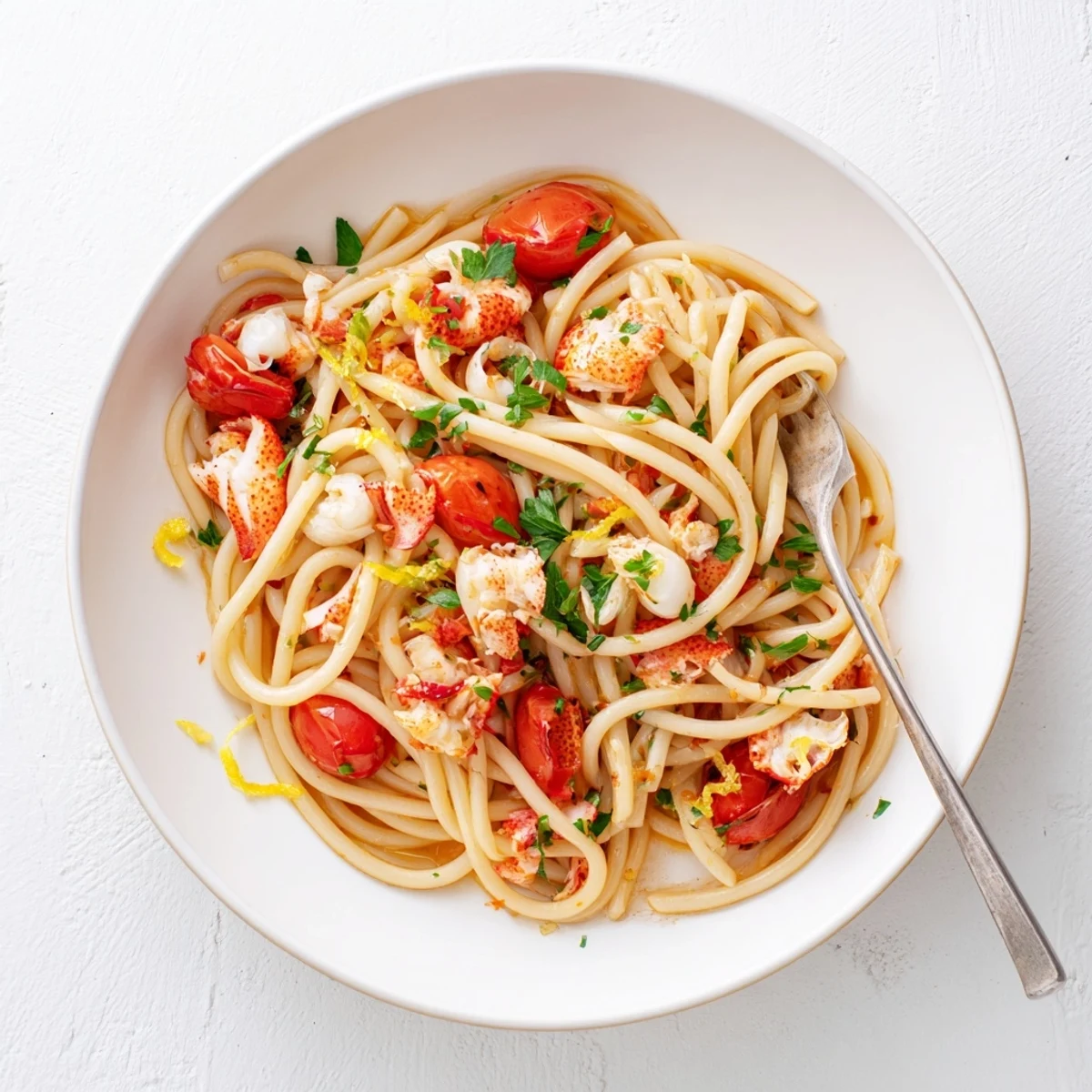
Save This recipe has become my answer to surprise dinner guests. The first time I made it for my mother, she asked which expensive Italian restaurant I had ordered from.
Making It Your Own
Bucatini is perfect here, but spaghetti or linguine work when you cannot find it. The hollow center of bucatini really does capture sauce differently, though, so hunt it down if you can.
Wine That Works
Pour a crisp white like Pinot Grigio or Vermentino both in the pan and in your glass. Something acidic cuts through the butter and highlights the sweetness.
Timing Is Everything
Mise en place becomes your best friend with this recipe. Everything moves quickly once the pasta hits the skillet.
- Prep all ingredients before turning on any burners
- Keep the lobster cold until the moment it hits the pan
- Have your serving bowls warm and ready
 Save
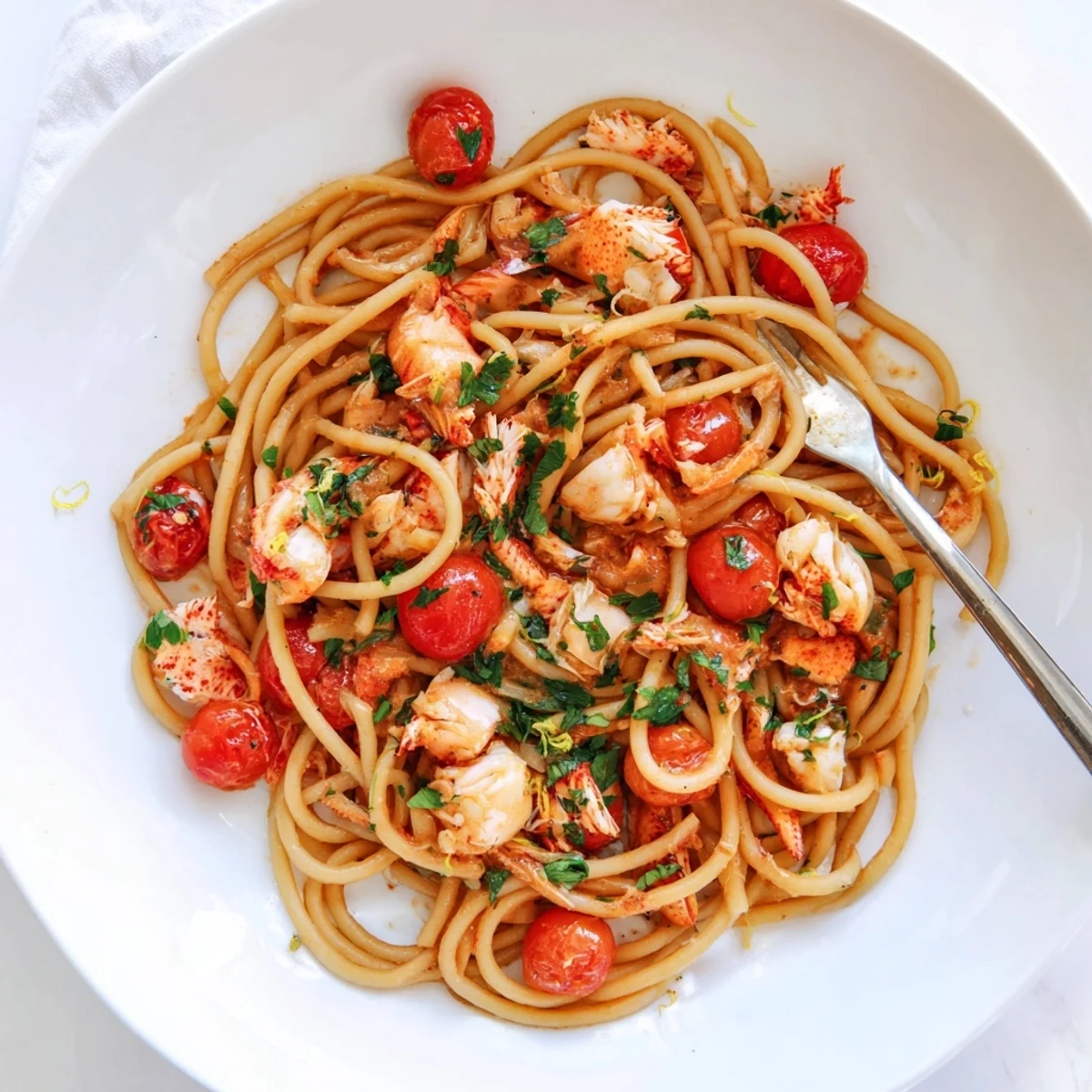
Save Some dishes are worth every minute, and this one proves it every single time.
Recipe Questions
- → Can I use pre-cooked lobster meat?
-
Absolutely. If using cooked lobster meat, skip the boiling step and add it during the final few minutes just to warm through. You'll need about 12 oz of meat.
- → What pasta works best as a substitute for bucatini?
-
Spaghetti or thick linguine make excellent substitutes. The thick sauce clings well to these long pasta varieties, though bucatini's hollow center does capture extra sauce.
- → How do I know when the lobster is properly cooked?
-
Live lobsters turn bright red and the meat becomes opaque when fully cooked. This typically takes 5-6 minutes in boiling water. Overcooking can make the meat tough, so watch carefully.
- → Can I make this dish ahead of time?
-
The sauce base can be prepared several hours ahead and refrigerated. However, cook the pasta fresh and toss everything together just before serving for the best texture and temperature.
- → What type of white wine should I use?
-
A dry white wine like Pinot Grigio, Sauvignon Blanc, or Vermentino works beautifully. Avoid sweet wines as they'll alter the sauce's balance. Use something you'd enjoy drinking.
- → How can I make the sauce richer?
-
Finish with an extra drizzle of high-quality olive oil or add a splash of heavy cream with the butter. Some also sprinkle grated Parmigiano-Reggiano, though this isn't traditional.