
 Save
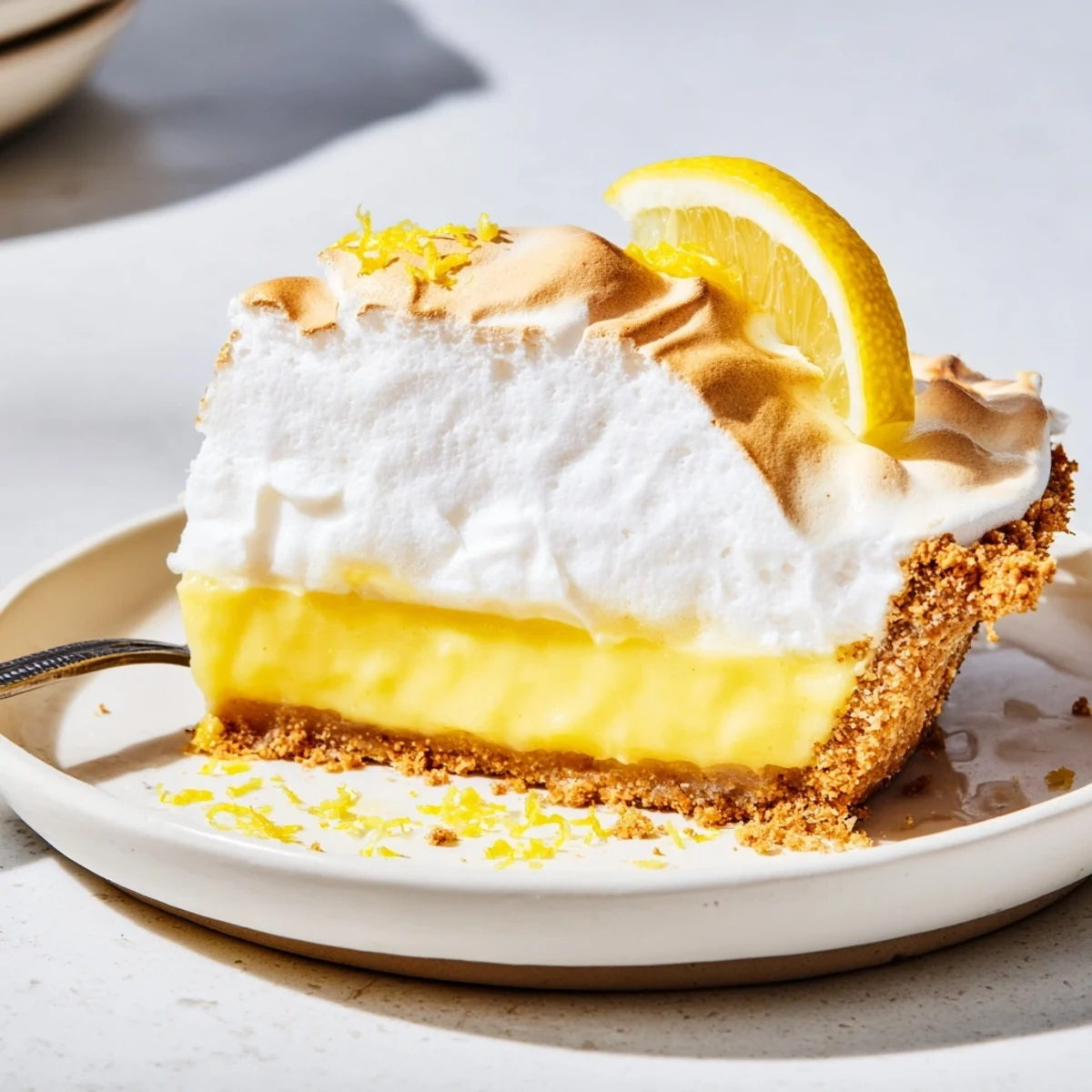
Save This classic American lemon pie features a buttery graham cracker crust filled with a bright, creamy lemon filling made from freshly squeezed lemon juice, zest, and egg yolks. The filling is cooked on the stovetop until thick and velvety, then poured into the baked crust.
An optional meringue topping made from whipped egg whites and sugar adds a beautiful golden finish. After baking, the pie chills for at least an hour to set perfectly. It yields 8 generous servings and is rated medium difficulty, making it an achievable weekend baking project.
The smell of lemon zest hitting a hot saucepan is one of those kitchen scents that instantly changes the mood in a room, and my kitchen is no exception. One rainy Saturday afternoon, with nothing planned and a bowl full of lemons sitting on the counter, I decided a lemon pie was the only reasonable course of action. The tart sweetness has a way of cutting through gloomy days and heavy moods alike. It has been my go to rescue dessert ever since.
I brought this pie to a potluck once and watched a friend who never eats dessert go back for a second slice without saying a word. That silence spoke volumes, and I knew the recipe was a keeper. My neighbor still texts me every spring asking if lemon season has arrived yet.
Ingredients
- Graham cracker crumbs (1 1/2 cups, 180 g): The foundation of a no fuss crust that presses right into the pan without any rolling or chilling.
- Granulated sugar (1/4 cup, 50 g for crust and 1 cup, 200 g for filling): Split between the crust for a subtle crunch and the filling for sweetness that tames the lemon bite.
- Unsalted butter, melted (1/2 cup, 115 g for crust and 2 tbsp, 30 g for filling): Melted butter binds the crust beautifully, and the extra bit in the filling adds richness and a glossy finish.
- Cornstarch (1/4 cup, 35 g): This is the thickening hero that transforms a thin lemony liquid into a luscious, sliceable filling.
- Salt (1/8 tsp): Just a pinch to wake up all the flavors and keep the sweetness from becoming one dimensional.
- Water (1 cup, 240 ml): Creates the base of the filling and helps the cornstarch do its job without scorching.
- Freshly squeezed lemon juice (1/2 cup, 120 ml, about 3 to 4 lemons): Fresh juice is non negotiable here since the bottled version tastes flat and lifeless by comparison.
- Grated lemon zest (2 tsp): Where the perfume lives, so do not skip it and make sure to zest before juicing.
- Large egg yolks (3 for filling and whites from 3 eggs for meringue): Yolks give the filling its custard character, while the whites transform into a cloud like meringue topping if you choose to go that route.
- Cream of tartar (1/4 tsp, optional for meringue): Stabilizes the egg whites so your meringue holds its dramatic peaks without collapsing.
Instructions
- Build the crust:
- Toss the graham cracker crumbs, sugar, and melted butter together until the mixture feels like damp sand. Press it firmly and evenly into a 9 inch pie pan, then bake at 350°F (175°C) for 8 to 10 minutes until lightly golden and fragrant.
- Start the lemon filling:
- In a medium saucepan, whisk the sugar, cornstarch, and salt together until no lumps remain. Pour in the water, fresh lemon juice, and zest, then set it over medium heat and whisk constantly until the mixture thickens and begins to bubble, about 6 to 8 minutes.
- Temper the yolks:
- Whisk the egg yolks in a small bowl, then slowly drizzle in a spoonful of the hot lemon mixture while whisking vigorously so the yolks warm gently without scrambling. Stir this tempered mixture back into the saucepan and cook for 2 more minutes, stirring the whole time.
- Finish and fill:
- Remove the saucepan from heat and stir in the softened butter until it melts completely into a smooth, glossy filling. Pour it directly into the cooled crust and spread it evenly with a spatula.
- Whip the meringue if using:
- In a spotlessly clean bowl, beat the egg whites and cream of tartar until soft peaks form. Gradually pour in the sugar while beating until stiff, shiny peaks hold their shape, then spread the meringue over the hot filling and seal it right to the crust edges.
- Bake and chill:
- Bake the assembled pie for 15 minutes until the meringue turns a lovely golden brown. Let it cool at room temperature for 1 hour, then chill for at least 1 more hour before slicing so the filling sets properly.
 Save
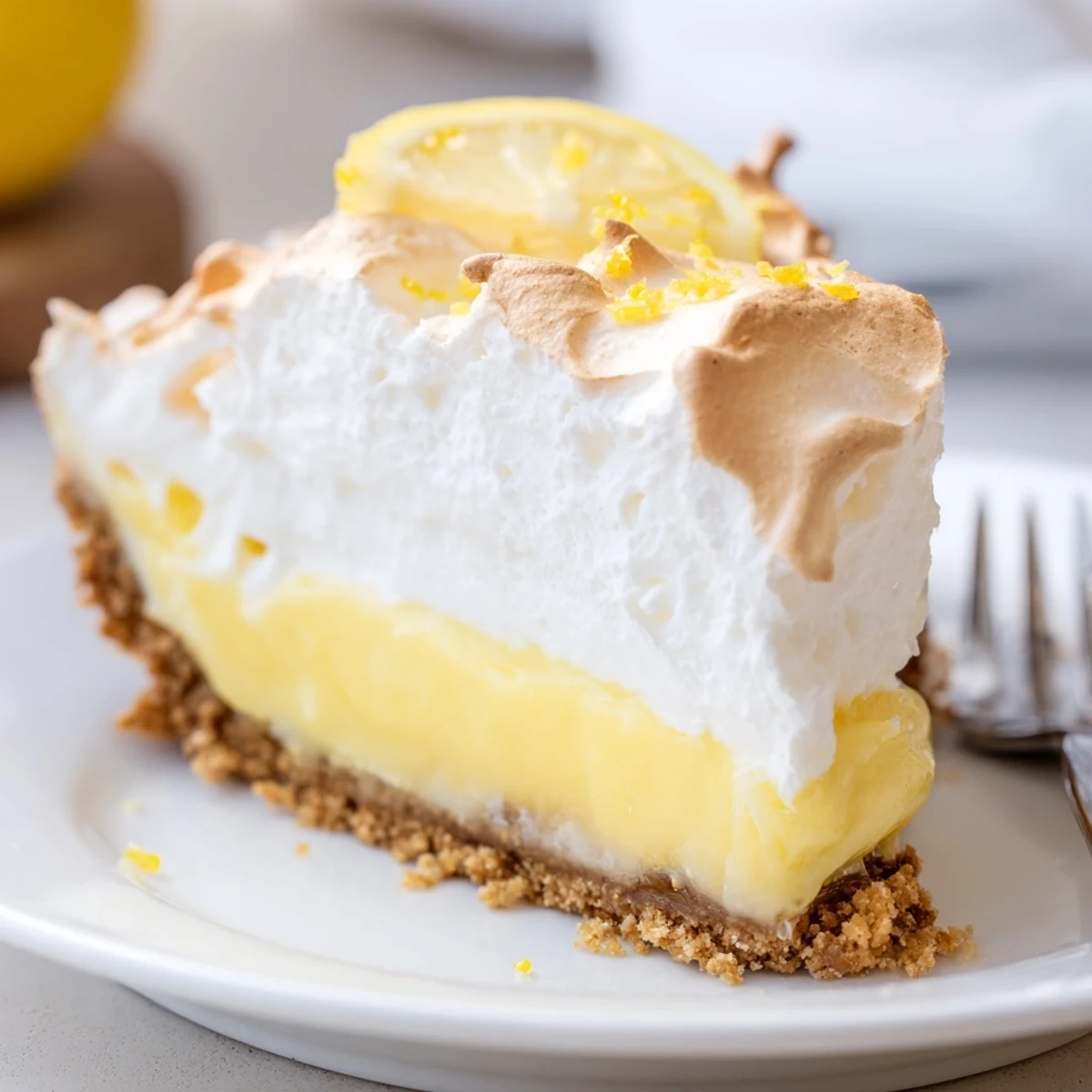
Save The moment this pie came out of the oven with its golden meringue peaks, my daughter declared it looked like a sunbeam with a hat on, and I have never been able to describe it any better since.
Getting the Filling Just Right
The trick to a smooth, velvety filling is constant attention during those critical minutes on the stove. I learned the hard way that stepping away even briefly leads to lumps that no amount of whisking can undo. The cornstarch needs continuous motion to activate evenly, and you will feel the shift in the whisk when the liquid suddenly thickens. That moment of transformation is deeply satisfying once you learn to trust the process.
Making the Meringue Your Own
A clean bowl is not a suggestion but rather the law when it comes to meringue, and even a trace of grease or yolk will keep the whites from ever reaching their full height. I wipe my bowl with a splash of lemon juice before starting as extra insurance. The sugar must be added gradually so it dissolves into the foam rather than weighing it down. Stiff, glossy peaks that hold their shape when you lift the whisk mean you are ready to spread.
Serving and Storing
This pie is at its absolute best on the day it is made, though it will keep in the refrigerator for up to three days if covered gently with plastic wrap. A sharp knife run under hot water makes clean, beautiful slices every time.
- Garnish with thin lemon slices or a sprinkle of extra zest for a classic presentation.
- A traditional pie crust works beautifully if graham crackers are not available.
- Omit the meringue entirely for a simpler pie that still delivers all the lemon punch.
 Save
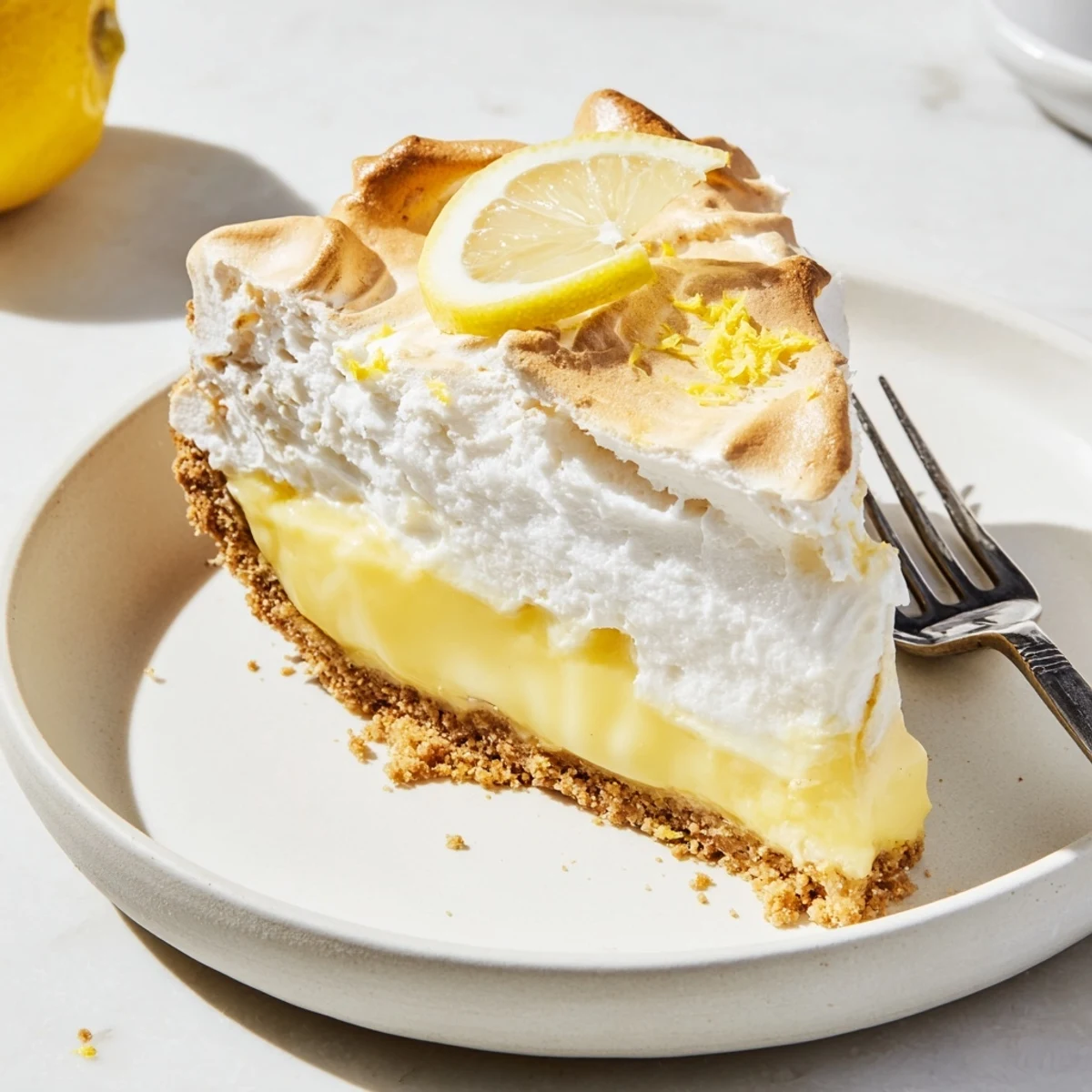
Save Every time I squeeze those lemons and the sharp citrus scent fills the kitchen, I feel like the day just reset itself in the best possible way. This pie is sunshine on a plate, and sharing it with someone makes it even sweeter.
Recipe Questions
- → Can I make lemon pie without the meringue topping?
-
Yes, the meringue topping is completely optional. You can skip it for a simpler version. If omitting, the pie still needs to chill for at least one hour so the filling sets properly before slicing.
- → How do I know when the lemon filling is thick enough?
-
The filling is ready when it coats the back of a spoon and you see it bubbling. This typically takes 6 to 8 minutes over medium heat. Whisk constantly to prevent lumps from forming.
- → Can I use bottled lemon juice instead of fresh?
-
Freshly squeezed lemon juice delivers the best flavor and brightness. Bottled juice can taste flat or slightly bitter. You will need about 3 to 4 lemons to get the required half cup of juice.
- → Why do I need to temper the egg yolks?
-
Tempering gradually raises the temperature of the egg yolks so they do not scramble when added to the hot mixture. Whisk a spoonful of the hot lemon base into the yolks first, then combine everything back in the saucepan.
- → How should I store leftover lemon pie?
-
Cover the pie loosely with plastic wrap or transfer slices to an airtight container. Store in the refrigerator for up to 3 days. If your pie has meringue, it is best consumed within 2 days as the topping may begin to weep.
- → Can I use a traditional pie crust instead of graham crackers?
-
Absolutely. A standard blind-baked pie crust works well as a substitute. Par-bake it at 350°F for about 15 minutes before adding the lemon filling for the best texture.